My hometown is near Putian, Fujian. The village is a little bit like an island: past the Mulanxi river, in the hills, surrounded by mountains. Because the village is in the foothills, there are no fields for farming. It is over 30 kilometers from the sea, so fishing isn’t convenient either. The villagers live off…
Read More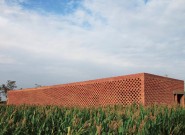
This farmhouse is similar in size to those around it. Its foundation rests on a space of about 10 by 30 meters and sits squarely in front of a field. The outer surface is neatly lined with red bricks, interrupted by evenly spaced openings in the shape of small crosses, standing out among the other…
Read More
JOSH KLINE To the keen eye of a New Yorker, Josh Kline’s work seems very “New York,” but not disdainfully so. Rather, through minimal sculptural works inspired by the aesthetics of the mass-market commodity, Kline highlights and pulls from the idiosyncratic blend of desperation, celebrity, and soul-suckingness that defines what it means to live and…
Read More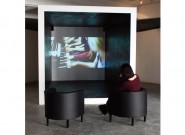
Exhibitions at Vitamin Creative Space all bear the gallery’s signature, although this faint mark remains within art circles and is yet to be openly and seriously discussed in a more public setting. Vitamin’s mode of operation is characterized by careful selection from its immediate environment, the “individual” perhaps the key to the majority of their…
Read More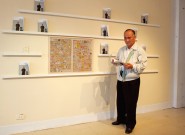
Over Taipei Contemporary Art Center’s (TCAC) two-year pilot period, in addition to organizing exhibitions, performances, and hosting short-term residencies, the minds be- hind TCAC have curated a wide variety of lectures. Now, on the eve of its relocation, they mounted the last exhibition and conceptual interrogation to take place on TCAC’s found- ing campus. In…
Read More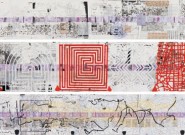
For thousands of years, the book has been a vehicle for the unbounded exploration of objective knowledge and experience and subjective feeling and imagination. Often books convey truths or tenets that, although they cannot be proven, come to the author in a flash of insight. Seen this way, the concept of an “artist’s book” might…
Read More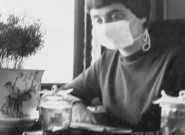
In 1957, the filmmaker Agnès Varda assumed the role of photographer during a two-month journey around both urban and rural China with a delegation of French dignitaries. Fifty-five years later, Varda resolved to display the photographs she took during that trip as part of the exhibition “The Beaches of Agnès Varda in China,” and in…
Read More
Art from China is highly fashionable in New York, but attention to one or another current star too often neglects the art-historical question of how contemporary art emerged at the dawn of Opening and Reform. This exhibition looks at three distinct movements— the No Name Group, the Stars, and the Grass Society—which functioned as agents…
Read More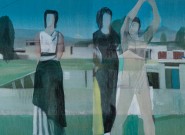
The paintings of the 51-year-old French artist Marc Desgrandchamps call to mind a number of key figures in the Western artistic tradition: Manet, Cézanne, Degas, or even the sculptures and architecture of ancient Greece. Traces of the styles of past masters appear continually in his works, though they still retain characteristically modern touches. Desgrandchamps concerns…
Read More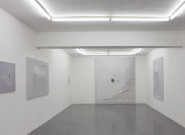
The predominance of a grayish-white has always been the most salient feature of Zhang JBai’s paintings. Even his depictions of concrete subjects, such as his series of portraits, possess a certain imagery. In his new exhibition, “I’ve Got Something,” he continues to ruminate on this same faintly discernible spatial relationship on the canvas. His is…
Read More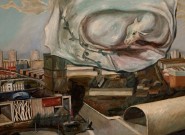
Up until now, Huang Liang’s paintings have been dominated by narratives of illness, or more specifically, that of his own bout with a misdiagnosed case of lung cancer. Suffering from respiratory ailments, his doctor’s faulty diagnosis landed Huang in two years of treatment, a time when he says he lost all hope and lived in…
Read More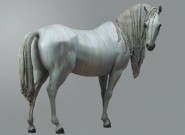
Following the exhibition, nearly all press coverage of “Will Things Ever Get Better?” referred to the figure of the horse. At the show, the horse was portrayed as utterly dejected and sad, bearing the look of intense scrutiny and existential doubt typical of a philosopher. Even though the portrayal of this slim yet hearty-looking horse…
Read More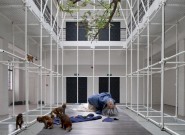
“You think you can just ask Confucius?” A group of his inquisitive pupils once said, and not un-rightly. It is therefore likely that Zhang Huan’s “Question” seeks to lead the viewer in proceeding from “Confucius” as symbolic subject, discovering new facets to this signifying symbol, catching glimpses of the relationships between Confucius and the self…
Read More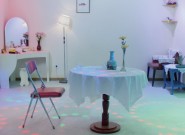
DANCING WITH STILLNESS Text: Chen Zhou / Translation: Marianna Cerini In Beijing one can still find a few ballrooms that cropped up at the end of the 1970s. In today’s society, these ballrooms have come to represent a specific trait of that era, and together with the people who frequented them, they have kept the…
Read More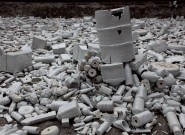
Porcelain chips and fragments produced by kilns across hundreds of years accumulate in piles along the banks of the Chang River in Jingdezhen, creating a tableau akin to an archeological dig of a manufacturing site. These piles are washed, rinsed, and sometimes exposed by the rise and fall of the tides in a perpetual water…
Read More
In 2006, Hong Kong billionaire Joseph Lau purchased an Andy Warhol silkscreen portrait of Mao Zedong for USD 17.4 million at a Christie’s auction. The following year, the real estate tycoon acquired Paul Gauguin’s Te Poipoi for upwards of USD 39 million at a Sotheby’s auction. In 2010, a purportedly Chinese buyer took home Picasso’s…
Read More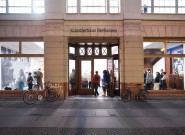
Located in Berlin’s Kreuzberg district, Künstlerhaus Bethanien is an exhibition space, publishing organization, and center for international artist residency programs. Last year, the establishment moved from its former historical building to a new privately owned location. Every one of the past 38 years, Künstlerhaus Bethanien has offered 12-month studio residencies and exhibition opportunities to dozens…
Read More
DOMAIN WHEN IN THE summer of 2010 Gao Shiming invited Wu Shanzhuan and Inga Svala Thorsdottir to design the logo for the China Academy of Arts’ then newly-established School of Inter Media Art, his hope was that the logo would have a narrative quality, and not the minimalist style popular today— something similar to more…
Read More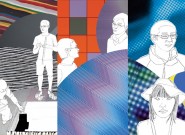
LIU WENTAO, WANG GUANGLE: SPACE AND TIME LIU WENTAO My early works consisted of piling layers of pencil lines on paper, gradually producing a highly compressed surface. Like looking at a flat plane of water, at a surface that gives no clues as to its actual depth,…
Read More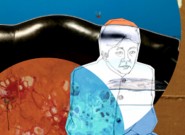
LAO ZHU: THE THIRD ABSTRACT The unforeseen emergence of abstract art in the modernism of late-1970s China can be attributed to two major factors. One is political, one artistic. First, the political: after the founding of new China in 1949, art policy labeled abstract expression as bourgeois; it…
Read More